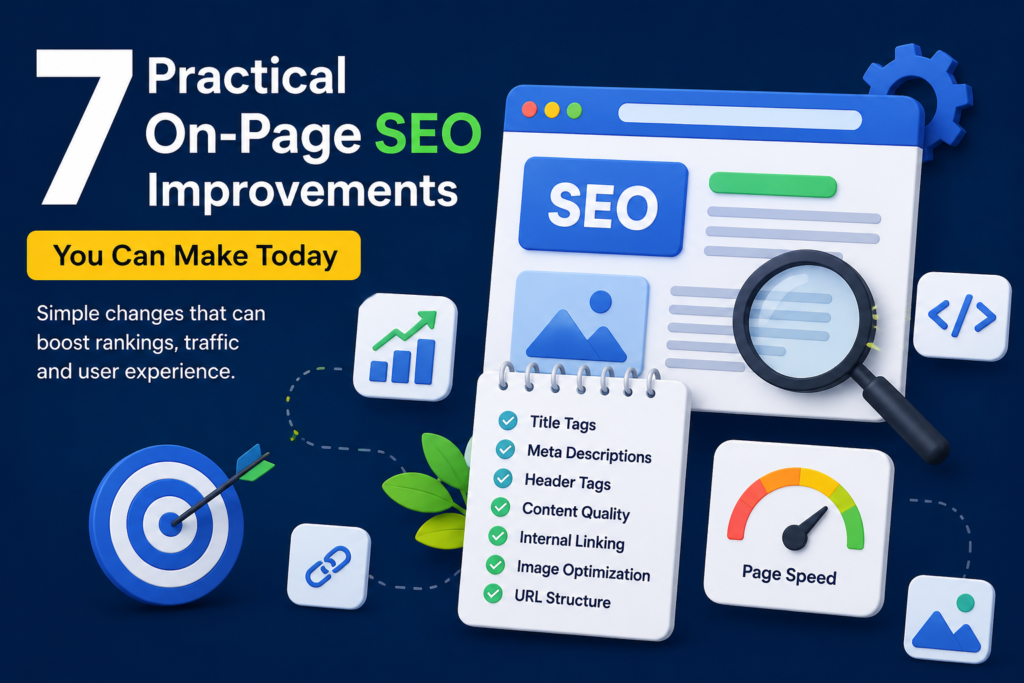
These on-page SEO improvements are simple to apply and can make your pages clearer for both people and search engines. For a full done-for-you approach, see my on-page SEO services.
1. Start with search intent
Before changing a title tag or adding a keyword, make sure the page answers the question a searcher actually has. Review the top-ranking results and look for the format, depth, and examples they provide.
2. Improve the page title and heading
Write a clear title that describes the page’s value. Use one descriptive H1, then organise supporting ideas with H2 and H3 headings. This makes the page easier to scan and helps search engines understand its structure.
3. Write a better meta description
A meta description does not directly boost rankings, but a clear one with a call to action can improve click-through rate from search results. Keep it under about 155 characters and match it to the page.
4. Strengthen internal links
Link to relevant pages using natural, descriptive anchor text. Internal links help visitors find the next useful resource and distribute relevance across your site. For example, link from guides to your SEO services page where it genuinely helps the reader.
5. Optimise images
Use descriptive file names and meaningful alt text, and compress images so pages load quickly. This supports both accessibility and image search.
6. Refresh content with useful detail
Add examples, answer common questions, and remove outdated claims. The goal is not to repeat a keyword. The goal is to make the page the most helpful result for its topic.
7. Measure what changes
Track impressions, clicks, and rankings after publishing. Use the data to decide what to improve next.
Want help with on-page SEO?
Not sure where to start? Get a free SEO consultation or view my SEO pricing plans.